77% AI Devices: How Technology Shapes Modern Medical Choices
"The right choice isn't found in a glossy brochure, but in the alignment between a provider's expertise and your specific health goals."
Choosing a medical professional is one of the most consequential decisions a person can make. It requires moving past convenience and looking deeply at specialization, technological integration, and communication styles.
Key Takeaways * Understanding the specific scope of a specialist's role prevents misdirected consultations. * Selecting a provider requires balancing clinical credentials with transparent communication and technological literacy.
* Thorough preparation and documentation are the primary drivers of a successful medical consultation.

What does a modern medical specialist actually do? In the dim light of the clinic, a hand trembles while gripping a heavy folder of charts.
A patient sits in a quiet, sterile waiting room, clutching a folder of printed lab results and feeling the weight of an uncertain diagnosis. They wonder if the person they are about to see is a technician of medicine or a true partner in health.
According to the Canadian Medical Association, an estimated 75 percent of Canadian healthcare services are delivered privately, but funded publicly.
The role of a medical specialist has evolved from simple diagnosis to a complex management of data and technology. While a general practitioner manages broad health, a most specialists focus on specific organ systems or disease states, often utilizing advanced diagnostic tools to pinpoint issues.
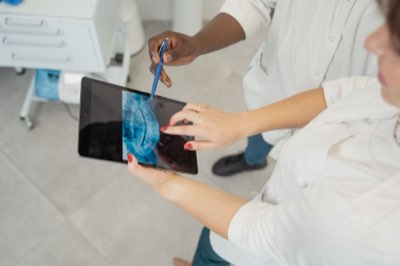
Technology is now a central part of this role. For instance, as of 2025, 77% (967 out of 1247) of all FDA-approved AI-enabled medical devices are located in the field of radiology.
This means a specialist's role often involves interpreting data augmented by artificial intelligence to ensure accuracy.
Global healthcare models also shape how these roles function. In some regions, such as Canada, an estimated 75 percent of healthcare services are delivered privately but funded publicly.
Understanding whether you are interacting with a system driven by public mandates or private delivery helps set expectations for availability and specialized access.
Ultimately, the specialist's job is to bridge the gap between abstract medical data and actionable treatment plans through evidence-based practice.
But knowing what they do is only half the battle.

How to Vet and Select the Ideal Medical Provider
Late at night, eyes strain against the blue glare of a laptop screen while a hand rubs a tired temple.
A person stares at a list of names on a computer screen, wondering which doctor actually listens and which one simply follows a script. The choice feels overwhelming when every website claims to be the best.
According to the Kaiser Commission on Medicaid and the Uninsured, an estimated 59 percent of uninsured adults have been uninsured for at least two years.
When vetting a provider, you must look beyond basic board certifications. While credentials are the baseline, the way a provider manages patient interaction and integrates new data is what defines quality.
You should evaluate whether they explain the "why" behind a recommendation or simply state the "what."
Alignment is a critical, often overlooked factor. You must determine if the provider’s philosophy matches your own. If you prefer conservative, non-invasive management and the provider leans toward aggressive surgical intervention, the relationship may fail.
Transparency regarding prognosis and alternatives is non-negotiable. A provider should be able to clearly outline the risks and the likelihood of success. Be wary of providers who promise certainty where none exists.
It is also important to understand the limitations of the tools they use. For example, while predictive modeling of electronic health record (EHR) data has achieved 70–72% accuracy in predicting individualized patient outcomes, it is not a perfect crystal ball.
A good provider will use these tools to inform decisions rather than letting the data make the decisions for you.
However, looking at the doctor is only one part of the equation.
How do I handle the costs, qualifications, and commitments? A patient reviews a printed estimate from a clinic, feeling a mixture of anxiety over the cost and confusion over the line items. They realize that the price of expertise is often complex and variable.
As of 2025, the FDA has approved AI-enabled medical devices where 77% are in the field of radiology.
Navigating the financial and professional landscape requires a clear understanding of fee structures. Costs can vary wildly between a single consultation, a diagnostic procedure, and ongoing management. Always ask for a breakdown of what is covered and what constitutes an additional fee.
When looking at qualifications, check for specific accreditations and the provider's history with your specific condition. A specialist's experience level should be weighed against the specific technological tools they utilize.
Global access and the ability to afford care remain significant hurdles.
In certain systems, the experience of the uninsured can be stark; for example, a study by the Kaiser Commission on Medicaid and the Uninsured estimated that 59 percent of uninsured adults had been uninsured for at least two years.
This reality highlights why understanding insurance coverage and out-of-pocket maximums is a vital part of the selection process.
To make an informed choice, compare the following factors:
| Factor | What to Look For | Why It Matters |
|---|---|---|
| Specialization | Deep expertise in a specific niche | Ensures the provider has seen similar cases. |
| Technology | Use of modern diagnostic tools | Improves accuracy and early detection. |
| Communication | Clear, empathetic, and transparent | Ensures you understand and follow the plan. |
| Cost Structure | Transparent and upfront pricing | Prevents unexpected financial strain. |
But even with a perfect match, you might still feel lost during the actual visit.

Preparing for Your Consultation: A Patient’s Checklist
A person sits at a kitchen table at 7:00 AM, organizing a stack of papers, scanning through old X-rays and handwritten notes from a previous doctor. They know that the quality of the information they provide will dictate the quality of the advice they receive.
Preparation is the most effective way to maximize the value of a medical appointment. You should never walk into a specialist's office without a clear objective and an organized history.
When I first started managing my own health records, I realized that showing up with a messy pile of papers often led to rushed, incomplete answers. I learned that organization is just as important as the medical advice itself.
The Preparation Checklist
- Organwall Documentation: Gather all recent imaging (CDs or digital links), lab results, and a chronological timeline of symptoms and treatments.
- Define Your Goals: Decide if you are seeking a primary diagnosis, a second opinion on an existing plan, or a discussion about surgical options.
- Draft Specific Questions: Write down questions regarding the diagnosis, the expected prognosis, and the specific risks of the proposed treatment.
- Review Technology and Data: Be aware of how digital tools might influence your visit. Interestingly, evaluators have sometimes preferred ChatGPT's responses to physician responses in 78.6% of evaluations, noting better quality and empathy. While AI is a tool, ensure your human provider is prepared to address the information you find through digital research.
Bringing a second set of ears—a friend or family member—can also help you remember the details discussed during the appointment.
But what happens after you leave the office?
Beyond the Appointment: Common Misconceptions and Next Steps
A patient leaves the clinic and walks into the bright afternoon sun, feeling a mixture of relief and lingering doubt. They wonder if they should have asked one more question or if the information they received is truly the final word.
As of 2025, the FDA has approved AI-enabled medical devices where 77% of those devices are in the field of radiology.
One of the most common misconceptions is that a specialist's opinion is the final, unchangeable truth. In reality, medicine is an evolving field, and second opinions are a standard and healthy part of the diagnostic process.
Frequently Asked Questions
Is a second opinion necessary? It is often highly recommended, especially for major surgical decisions or life-altering diagnoses. A second perspective can confirm a finding or offer an alternative path that the first provider did not suggest.
How do I know if a provider is using the latest technology? Ask directly about the diagnostic tools and software they use. A provider who is engaged with modern medicine will be able to explain how they use tools like AI-enhanced imaging or predictive modeling to assist in your care.
What if the cost is higher than expected? Always request a written estimate before proceeding with significant procedures. If the cost is a barrier, ask the provider's office about financial counseling or if there are more cost-effective diagnostic alternatives.
When should I seek a specialist versus a general practitioner? A general practitioner is your first line of defense.
You should move to a specialist when a condition requires specific expertise, advanced diagnostic equipment, or specialized procedural skills that go beyond general medical knowledge.
Limitations and Trade-offs It is important to note that while specialized expertise is valuable, over-specialization can sometimes lead to "siloed" care where the whole-body context is lost.
Always ensure your specialist communicates with your primary care physician to maintain a cohesive health strategy.
FAQ
현대 의료 전문가의 역할은 무엇인가요?
의료 분야에서 인공지능(AI) 기술은 어느 정도 사용되고 있나요?
의료 서비스를 이용할 때 고려해야 할 중요한 요소들은 무엇인가요?
Related posts

Evidence-Based Care: Your Guide to Quality Medical Treatment

70% Accuracy: How Data Drives Modern Patient Outcomes Now

8 Steps to Choosing Your Next Medical Specialist Provider



Comments 0