Beyond Symptoms: How to Select the Right Medical Expert Now
"The right medical expert doesn't just treat a symptom; they navigate a complex system to find a sustainable path forward."
Choosing a medical specialist is often a high-stakes decision made under pressure. Whether you are seeking a second opinion or managing a chronic condition, understanding how to vet a provider is essential for long-term health management.
Key Takeaways
* Identify the specific scope of work, such as diagnostic versus management roles, before booking. * Evaluate providers based on clinical specialization and adherence to evidence-based protocols. * Prepare a structured dossier of medical history to maximize the efficiency of every consultation.

How will a medical specialist impact my journey? In the dim light of the clinic, a hand trembles while gripping a worn folder of medical records.
A quiet waiting room holds a sense of quiet tension as a patient sits, clutching a folder of thick, white papers. They are looking for answers, but they don't yet know if they need a strategist or a technician.
In the medical field, specialists serve distinct roles that dictate how they interact with your health. Some professionals focus on diagnostic precision, using advanced imaging and testing to identify a problem. Others focus on management, providing long-term oversight for chronic issues.
The typical workflow usually follows a pattern: an initial clinical assessment, followed by diagnostic testing, and finally, the development of an intervention or management plan. It is vital to understand which phase you are in.
If you are looking for a definitive answer, you need a diagnostic specialist. If you are looking to maintain stability, you need a management expert.
You must also differentiate between service types. Some specialists provide high-level consultative expertise that often requires out-of-pocket payment, while other routine services are more likely to be covered by standard insurance protocols.
Knowing this distinction prevents financial surprises during the treatment phase.

How to Vet and Select the Ideal Expert
A person stands before a large hospital directory, scanning names and looking for a specific department. They wonder if the name on the door matches the quality of care inside.
Selecting a provider requires moving beyond anecdotal evidence or word-of-mouth. While a neighbor's recommendation is a starting point, it is not a clinical benchmark.
You should establish objective criteria, such as the provider's specific sub-specialization and their volume of experience with your particular condition.
Due diligence involves researching a provider’s track record and their adherence to current clinical protocols. You want an expert whose practice is grounded in evidence-based medicine—the application of the best available research to individual patient care.
It is also helpful to understand the systemic context of your care.
For example, in different global models, such as in Canada, an estimated 75 percent of healthcare services are delivered privately but funded publicly, according to Albert Schumacher, a former president of the Canadian Medical Association.
While the American system differs, understanding that private delivery often meets public-style regulation helps in evaluating how much autonomy a provider has over their own practice and costs.
But looking at a name on a website is only the beginning.
What will the costs, qualifications, and commitments be? A thick envelope of medical bills sits on a kitchen table, next to a magnifying glass. The numbers don't quite add up to the care that was promised.
Understanding the financial and professional landscape is crucial for transparency. Fee structures vary wildly, often split between consultation fees, procedure-based costs, and ongoing management fees. Always ask for a breakdown of these costs during the initial intake to avoid "surprise billing."
Regarding qualifications, look for the depth of training rather than just a title. A board certification in a specific sub-specialty is often more valuable than a general medical degree when dealing with complex issues.
Technology is also changing the benchmark for expertise.
When selecting a specialist, ask how they integrate these technological advancements into their diagnostic process. This can give you an idea of whether they are staying current with high-accuracy tools, such as those used in predictive modeling or advanced imaging.
| Feature | Diagnostic Specialist | Management Specialist |
|---|---|---|
| Primary Goal | Identifying the root cause | Maintaining stability/quality of life |
| Typical Workflow | Testing and intervention | Monitoring and adjustment |
| Interaction Frequency | Often episodic/intense | Often regular/long-term |
| Key Requirement | High-tech diagnostic tools | Comprehensive history management |
However, having the right data is useless if you don't know how to present it.

Preparing for Your Consultation: Maximizing Value
A patient sits in a chair, tapping a pen against a notebook filled with scribbled dates and names. They have thirty minutes to explain thirty years of health history.
To make the most of a specialist's time, you must arrive prepared. A disorganized patient often leaves a consultation with unanswered questions because the time was spent hunting for lost records.
Follow this step-by-step checklist to prepare for your visit:
- Organize Documentation: Gather all previous medical records, lab results, and imaging reports into a single, chronological folder.
- Define Your Goal: Clearly state if you are there for a definitive diagnosis, a second opinion, or a treatment adjustment.
- Summarize Your Timeline: Write a brief, bulleted history of your symptoms, including when they started and what makes them better or worse.
- Prepare Targeted Questions: Instead of saying "I feel bad," ask "What are the specific risks of this procedure?" or "What is the alternative to this medication?"
- List Current Medications: Include dosages and any supplements or over-the-counter vitamins you take regularly.
By arriving with a clear objective, you shift the dynamic from a passive recipient of information to an active participant in your care.
But what happens when the data contradicts your intuition?
Navigating Modern Healthcare: Myths vs. Reality
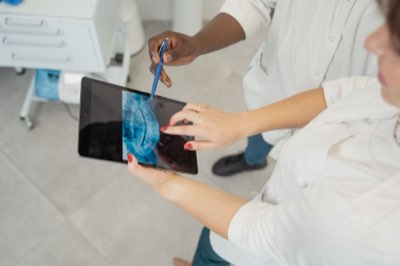
A digital screen flickers in a dark room, displaying a complex scan that looks more like art than anatomy. The user wonders if a machine can truly understand a human body.
According to the Kaiser Commission on Medicaid and the Uninsured, an estimated 59 percent of uninsured adults have been uninsured for at least two years. As of 2025, the FDA has approved AI-enabled medical devices where 77% are in the field of radiology.
There are many misconceptions regarding medical expertise. One common myth is that a new technology or an AI-driven diagnosis is always superior to a human physician's intuition. While technology is transformative, it is a tool, not a replacement.
For example, while researchers have noted that evaluators sometimes preferred ChatGPT's responses to physician responses in 78.6% of 585 evaluations due to perceived empathy and quality, an AI cannot replace the physical examination or the nuanced understanding of a patient's lifestyle.
Another reality is that diagnostic certainty is rarely 100%. Even with high-tech tools, there is often a margin of error. Understanding this helps manage expectations.
You are not looking for a perfect machine; you are looking for a professional who knows how to interpret data—both digital and human—to make the best clinical decision.
FAQ
의료 전문가를 선택할 때 가장 먼저 확인해야 할 것은 무엇인가요?
특정 질병 관리에 필요한 전문가의 유형은 무엇인가요?
의료 상담의 효율성을 높이기 위해 환자가 준비해야 할 것은 무엇인가요?
Related posts

Evidence-Based Care: Your Guide to Quality Medical Treatment

70% Accuracy: How Data Drives Modern Patient Outcomes Now

8 Steps to Choosing Your Next Medical Specialist Provider



Comments 0