77% AI Devices: How Technology Shapes Modern Medical Choices
"The right medical expert doesn't just treat a symptom; they navigate a complex ecosystem of data, technology, and human empathy to find a path forward."
Choosing a medical provider is one of the most consequential decisions a person can make, yet it is often approached with more emotion than strategy. This guide provides a framework to move beyond anecdotal advice and toward a systematic selection process.
* Understand the specific scope of practice for your medical needs. * Prioritize evidence-based methodology over mere reputation. * Prepare data-driven questions to maximize consultation value. * Distinguish between different delivery models and cost structures.

What does a modern medical specialist actually do? A quiet hallway in a metropolitan hospital stretches toward a heavy oak door, where a specialist waits to review a digital chart. This is where the clinical workflow begins, moving from data collection to decisive action.
Modern medical specialists operate within specific scopes of practice, which can be broadly categorized into diagnostic, therapeutic, or preventative roles. A diagnostic specialist focuses on identifying the root cause of an issue, often using advanced imaging or laboratory work.
A therapeutic specialist focuses on managing an existing condition through intervention, while preventative specialists work to mitigate risks before they manifest as illness.
The typical workflow follows a logical progression: initial assessment, diagnosis, development of a treatment plan, and consistent follow-up.
It is vital to differentiate between primary specialists, who manage general health within a specific organ system, and allied health professionals, who provide specialized support like physical therapy or nutritional counseling.
Understanding which role you need prevents wasted time and unnecessary costs.
As you move from general health to specialized care, the complexity of the decision-making process increases.

Establishing Your Selection Criteria: How to Vet a Provider
You sit in a waiting room, looking at a wall of framed certificates, wondering which one actually matters for your specific health concern. It is easy to be swayed by a prestigious name, but true vetting requires looking deeper than a wall of accolades.
Effective selection must move past simple online reviews and focus on a provider’s adherence to current standards of care. While a high volume of patients might suggest popularity, it does not always guarantee quality. Instead, look for practitioners who emphasize Evidence-Based Practice (EBP).
This means their advice is grounded in peer-reviewed clinical literature rather than outdated tradition or personal anecdote.
It is important to note that even in developed nations, the application of EBP is not universal. A 2007 literature review indicated that approximately 49% of clinical interventions lacked sufficient evidence regarding their benefit or harm.
Therefore, asking a provider how their proposed treatment aligns with current clinical guidelines is a necessary step. Finally, conduct an alignment check. Ensure their philosophy—whether aggressive intervention or conservative management—matches your personal health goals and lifestyle.
Once you understand the standards, you must understand the systemic reality of how these experts operate.
How do costs, qualifications, and the market work? A thick envelope of insurance paperwork sits on a kitchen table, representing the financial weight of a medical consultation. Navigating these costs requires a clear understanding of how different systems function globally and locally.
According to the Kaiser Commission on Medicaid and the Uninsured, an estimated 59 percent of uninsured adults have been uninsured for at least two years.
According to the Canadian Medical Association, an estimated 75 percent of Canadian healthcare services are delivered privately, but funded publicly.
The landscape of medical delivery varies significantly depending on geography. For example, Albert Schumacher, a former president of the Canadian Medical Association, noted that an estimated 75 percent of Canadian healthcare services are delivered privately, even though they are funded publicly.
This distinction between who provides the service and who pays for it is crucial for understanding availability and access.
In the United States, the complexity often lies in the gap between coverage and care. A study by the Kaiser Commission on Medicaid and the Uninsured estimated that 59 percent of uninsured adults have been uninsured for at least two years.
This reality makes understanding fee structures—whether they are hourly, package-based, or insurance-negotiated—an essential part of due diligence.
When looking at providers, you must also verify their specific credentials and licenses within your jurisdiction to ensure they are legally authorized to practice their specialty.
With the systemic context established, we can look at how technology is changing the way these experts work.
The Impact of Technology and AI on Medical Expertise
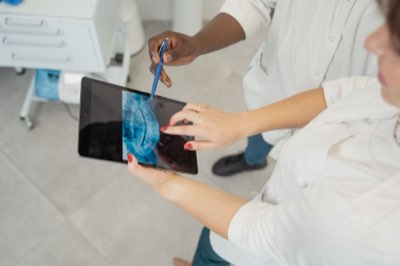
A doctor stares at a high-resolution scan, where a subtle shadow is highlighted by an intelligent software overlay. This intersection of human intuition and machine precision is the new frontier of medical expertise.
As of 2025, the FDA has approved AI-enabled medical devices where 77% are in the field of radiology.
As of 2025, the FDA has approved AI-enabled medical devices where 77% are in the field of radiology.
The integration of technology is rapidly changing the role of the medical expert. As of 2025, 77% of all FDA-approved AI-enabled medical devices are located in the field of radiology, highlighting how much diagnostic work is being augmented by digital tools.
This doesn't replace the doctor, but it changes the nature of their expertise.
Interestingly, the human element remains a critical benchmark for quality.
In studies where evaluators compared different types of responses, they preferred ChatGPT's responses to physician responses in 78.6% of 585 evaluations, specifically noting better quality and empathy in the AI-generated text.
This suggests that as technology takes over more data-heavy tasks, the human expert's ability to provide empathy and clear communication becomes a primary differentiator.
Furthermore, data-driven precision is increasing. One study conducted by the Centerstone research institute found that predictive modeling of Electronic Health Record (EHR) data has achieved 70–72% accuracy in predicting individualized patient needs.
As these tools become more common, choosing a provider often means choosing how they integrate these technologies into their practice.

Comparing Different Types of Medical Providers
| Feature | Primary Care Specialist | Sub-Specialist | Allied Health Professional |
|---|---|---|---|
| Primary Focus | General management of a system | Deep expertise in a specific disease | Supportive/Rehabilitative care |
| Interaction Frequency | High (Routine visits) | Moderate (Condition-specific) | Variable (Scheduled sessions) |
| Diagnostic Depth | Broad screening | Advanced, targeted testing | Functional/Physical assessment |
| Typical Workflow | Assessment & Coordination | Targeted Intervention | Rehabilitation & Support |
Choosing between these roles depends entirely on where you are in your medical journey.
How to Prepare for a Consultation
You hold a notebook in your lap, a list of questions written in neat columns, feeling a mix of anxiety and readiness. Preparation is the difference between a vague conversation and a productive clinical encounter.
To maximize the value of an expert's time and your own financial investment, follow these steps:
- Consolidate Medical History: Gather all recent lab results, imaging reports, and a list of current medications.
- Define Your Primary Goal: Are you looking for a diagnosis, a second opinion, or a management plan for a known condition?
- Prepare Targeted Questions: Ask about the evidence behind a recommendation, the potential side effects, and the expected timeline for results.
- Document the Outcome: Bring a way to take notes so you don't forget the nuances of the discussion once you leave the office.
I remember my first major specialist appointment back in 2024. I sat in a sterile office, clutching a folder of papers, feeling completely overwhelmed by the jargon. It wasn't until I created a structured list of questions that I felt I actually had a voice in my own care.
Effective preparation ensures that the specialist spends less time hunting for data and more time addressing your specific needs.
FAQ
현대 의료 전문가들은 구체적으로 어떤 역할을 수행하나요?
의료 전문가를 선택할 때 가장 중요하게 고려해야 할 사항은 무엇인가요?
의료 서비스의 종류에 따라 어떤 전문가들이 있나요?
Related posts

Evidence-Based Care: Your Guide to Quality Medical Treatment

70% Accuracy: How Data Drives Modern Patient Outcomes Now

8 Steps to Choosing Your Next Medical Specialist Provider



Comments 0